Paddling forward on a Stand-Up Paddleboard (SUP) may seem straightforward, but it requires a bit of practice and understanding to do it effectively and efficiently. Getting the hang of moving forward in a straight line can be tricky, especially with factors like wind, body positioning, and weight distribution. However, once you grasp the basics, you’ll be cruising across the water with ease. Let’s dive into some tips and techniques to help your forward paddling and turn with confidence.
Perfecting Your Forward Paddle Stroke
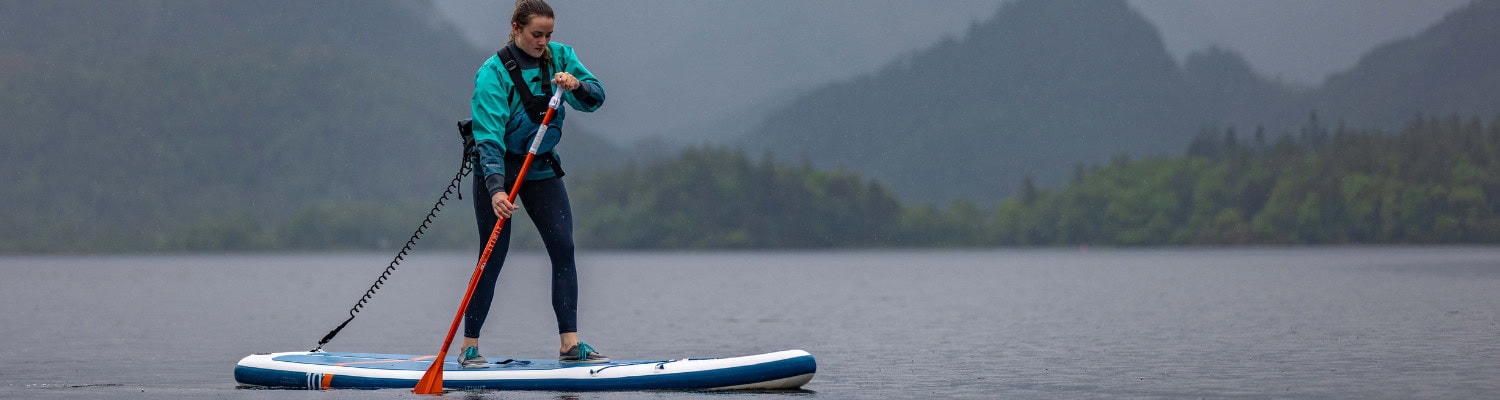
To start, mastering the forward stroke is crucial. The way you position your body, grip the paddle, and use your stroke will make a huge difference in your ability to move straight. Here are a few tips to get you going:
- Keep Your Arms Straight: It’s tempting to hug the paddle close to your body, but this limits your reach and power. By keeping your arms straight, you engage your core more effectively and extend your stroke, allowing you to pull more water with each stroke.
- Hands Wide Apart: Placing your hands wider apart on the paddle acts as a lever, helping you maximize the force you generate with each stroke. This also allows for a smoother and more controlled movement.
- Full Blade in the Water: Ensure that the entire blade of the paddle goes into the water, all the way up to the shaft. The more surface area you use, the more power you can generate, making each stroke more efficient and effective. A shallow stroke will only make it harder to move forward.
- Vertical Paddle Position: Keep the shaft of the paddle as vertical as possible. If the paddle tilts at an angle, it can cause the board to turn rather than go straight, which is the last thing you want when trying to move in a straight line.
- Close to the Board: The closer the blade and shaft are to the side of your board, the more likely you are to move in a straight line. The further away you pull the paddle from your board, the more you risk turning or veering off course.
- Switch Sides Regularly: It’s easy to get carried away on one side of the board, but it’s important to alternate sides every 8 to 12 strokes. This helps you maintain balance and prevent your board from drifting in one direction.
Turning Techniques: Simple and Effective
Once you have the forward stroke down, it’s time to learn how to turn your board. There are various types of turns, each serving different purposes depending on your situation, such as racing or avoiding obstacles on a river. However, as a beginner, you don’t need to get bogged down with technical terms. Let’s focus on an easy and effective way to turn your board.
The Forward Sweep Stroke:
One of the simplest and most effective turns is the forward sweep stroke. To execute it, position your paddle at the nose of your board and draw a large semi-circle, sweeping the paddle from the front to the back. This motion will cause the board to turn in the direction you want.
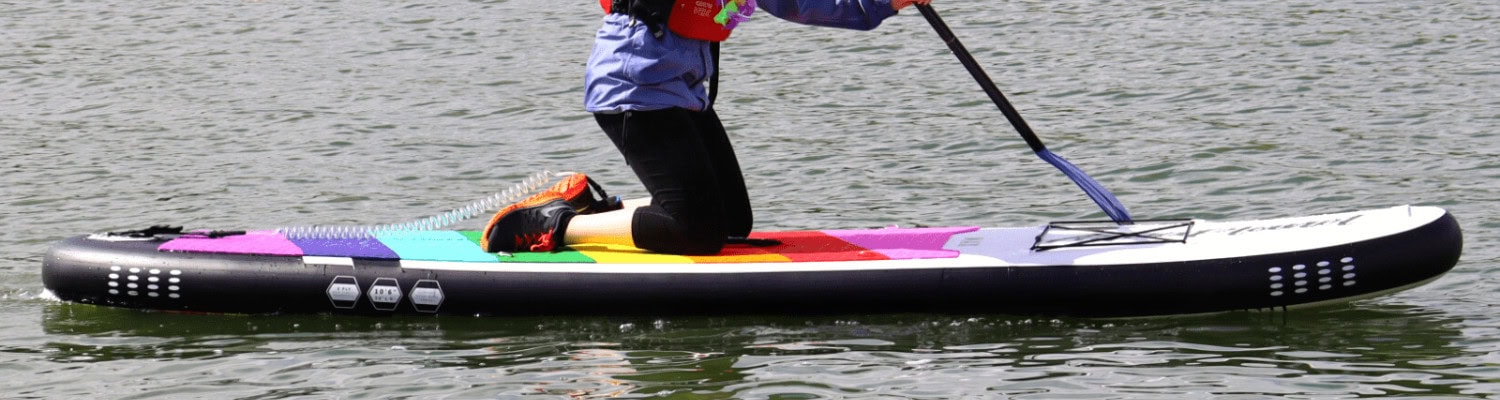
While learning, it can be helpful to practice this technique while kneeling on the board. This gives you a more stable base and allows you to get a better feel for how the paddle moves through the water. As you gain confidence, try it standing up.
Other Common Turning Techniques:
Though we’re keeping it simple, here are some common terms you may hear as you progress:
- Bow Turn: A turn performed by applying a sweep stroke to the bow (front) of the board.
- Cross Bow Turn: Similar to the bow turn but with the paddle on the opposite side of your board.
- Step Back or Pivot Turn: A more advanced technique where you step back on the board and use a strong paddle stroke to pivot.
Don’t worry about the terminology at first. Focus on the basic techniques and get comfortable with moving your board in different directions.
Experiment and Have Fun
The best way to refine your paddling and turning skills is to practice in calm, still water. Take the time to experiment with different paddle strokes and observe how they affect the movement of your board. Don’t be afraid to try kneeling on your board to gain more stability as you learn the basics. Over time, you’ll develop a better feel for your paddle and how to control your movements.
By practicing regularly, you’ll soon find that moving forward in a straight line and turning your board become second nature. And remember, it’s all about enjoying the experience—so have fun while you learn!