If you’ve wandered past any stretch of water in Britain lately, a Cornish cove, a peaceful Scottish loch, or even a city canal, you’ve probably seen them. Silent and steady, these modern explorers cruise by, upright and balanced, gripping a paddle, their boards bright enough to spot a mile away.
Stand-up paddleboarding (SUP) isn’t just for hardcore surf types anymore. Over the last ten years, it’s become a staple of British weekends and holidays. But how does a sport dreamed up in Hawaii’s surf break end up thriving on Britain’s chilly, unpredictable waters?
Here’s what happened…

1. The Inflatable Revolution
Traditional boards were huge, heavy, and a hassle. You needed a roof rack, a garage, some biceps, and a good bit of patience just to get one to the water.
Then the inflatable stand-up paddleboard, or iSUP, came along.
Thanks to “drop-stitch” technology, inflatables now get so solid you’d swear they were fiberglass. Deflated, they pack down into a backpack.
They’re cheap too; you can pick up full kits for less than £200.
You can shove one in the back of a tiny car, bring it on the train, or even haul it down to the river in a backpack. No garage required, you just slide it into a closet.
Basically, iSUPs leveled the playing field. Suddenly, paddleboarding was for everyone, not just the ultra-fit or well-off.
2. The Pandemic Effect
SUP was already creeping into the mainstream, but the pandemic sent things into overdrive. With flights grounded and holidays abroad canceled, everyone turned to Britain’s own backgarden.
When lockdowns finally eased up, staying outdoors and keeping distance were the only ways to socialize. Paddleboarding ticked every box:
You could catch up with a pal safely, away from crowds.
It was the perfect escape from endless Zoom calls and four walls.
And everyone seemed to be chasing that feel-good outdoor buzz.
In 2020, shops ran out of boards in weeks, demand went wild. Paddleboarding stopped being just a novelty and became a habit.

3. Britain’s Ready-Made Playground
Forget big waves, calm, flat water is perfect for paddleboarding. That’s lucky, because Britain has it in spades.
The canal network alone is over 2,000 miles, the country’s veins, perfect for exploring. Then you’ve got the vast lakes and lochs, from Cumbria up to the Highlands, with postcard views and usually just enough breeze to keep cool. And let’s not ignore the coastline. Tucked-away bays and mellow summer seas promise endless adventures.
You don’t need surf, or wind. Britain’s “blue spaces” were just waiting; SUP unlocked them.
4. The Mind-Body Fix
At the heart of it, paddleboarding sticks because of how it feels.
Physically, it’s low-impact but works nearly every muscle, mainly your core, and it won’t wreck your knees like running. The mental payoff goes even further. That gentle rhythm, finding your balance, being close to nature, it’s all strangely calming. Like a moving meditation.
For loads of people, time on the water is the best way to unwind, de-stress, or just hit reset. Science agrees: being near water really does help your mental health.
Where Paddleboarding Goes Next
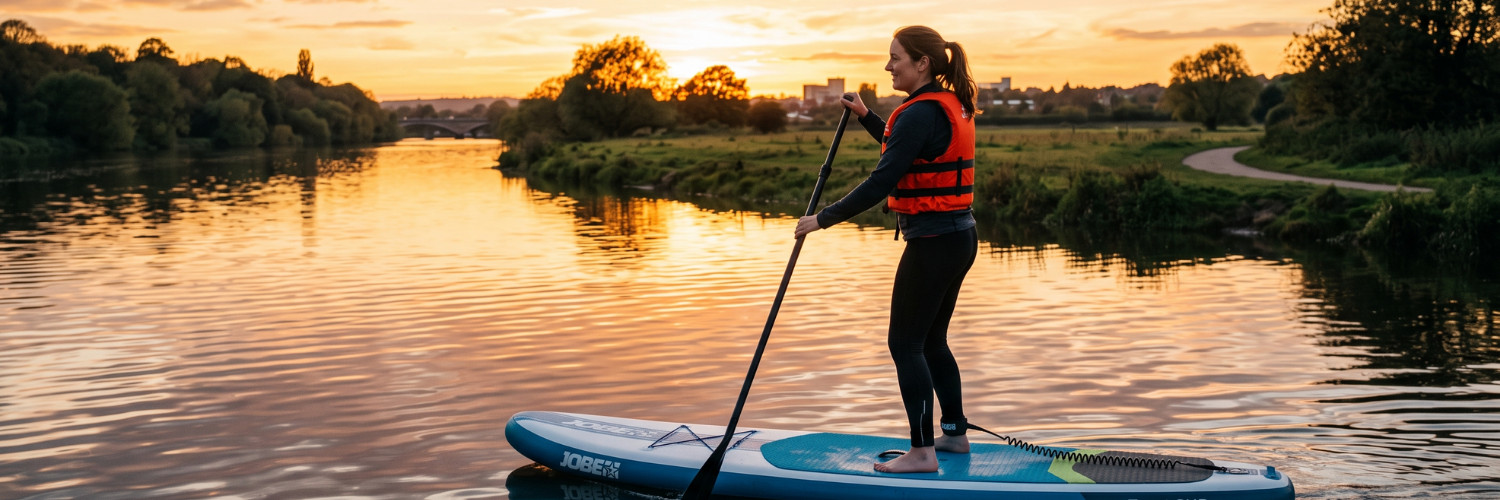
These days, paddleboarding is stitched into the UK’s outdoor culture. You’ll spot SUP yoga classes, multi-day trips down the Thames, even groups paddling around picking up litter as they go.
What started as a sunny-day import fits right in now. SUP survives the weather, travels easily, and soaks up everything quirky and British, yes, even rain. The paddleboard revolution didn’t crash in with big waves. It quietly slipped in, zipped up in a backpack, and found its place across Britain’s wild and watery corners.