Tell a paddler about inflatable kayaks ten years ago and watch them roll their eyes. For a long time, inflatables were basically punchlines, cheap, floppy, meant for splashing around near the beach, not actual kayaking. If there was any wind? Good luck steering. You can thank the infamous “banana boat” for all that bad press.
Honestly, if you’re still clinging to your heavy hard-shell kayak because you just don’t trust inflatables, you might be missing out. Technology hasn’t stood still, far from it. That dreaded “banana boat” is ancient history, and today’s inflatables might blow your mind.
The Banana Boat, Explained
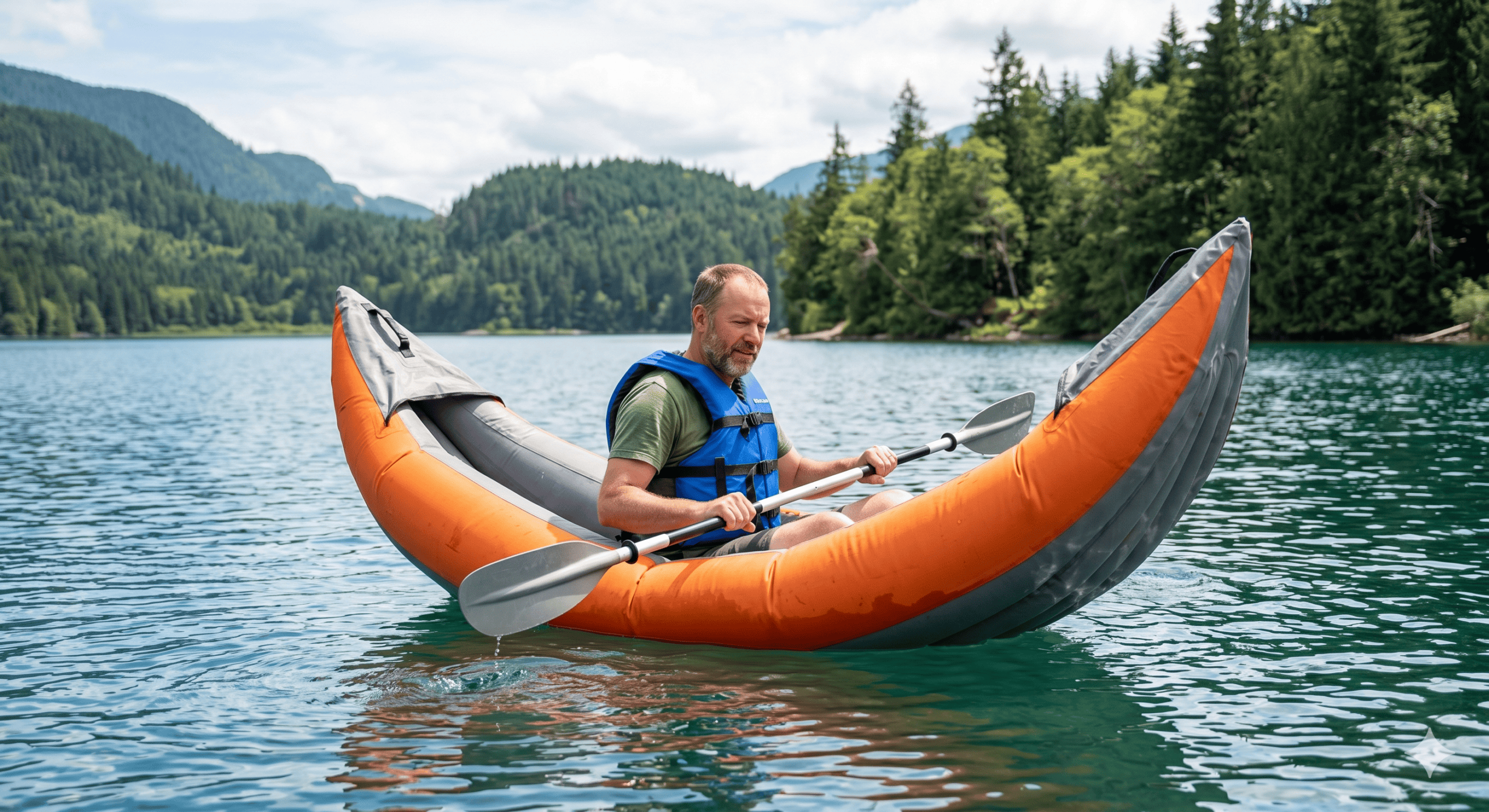
If you’ve even sat in an old or bargain-bin inflatable, you know the feeling. You shove off, settle into your seat, and the center of the kayak just sinks under you. The ends rise out of the water like you’re paddling a banana. That’s the banana boat.
It made steering a nightmare. The boat basically wobbled and spun in every direction, eating up your energy and making you question your life choices. All this because old inflatable hulls were just low-pressure tubes. No matter how hard you inflated them, the floor simply couldn’t spread your weight out, so the whole thing sagged in the middle.
Drop-Stitch Technology Changed Everything
What killed the banana boat? Drop-stitch. It’s a construction borrowed from stand-up paddleboards, and it’s a total game changer.
Instead of just an air chamber, a drop-stitch design uses thousands of tiny, tough fibers linking the top and bottom layers inside the floor. When you pump this thing up, those threads keep everything flat and solid.
Here’s what happens:
You can inflate it to 10 or even 15 PSI, way higher than the old 1–2 PSI tubes. When fully pumped, the floor is ridiculously rigid. It actually feels like wood; you can stand on it and it barely flexes. Newer designs use this tech in the bow and stern too, shaping real V-hulls so the kayak slices through water instead of just loafing on top. It feels more like paddling a solid boat than a pool toy.
Inflatables Are Tough Now
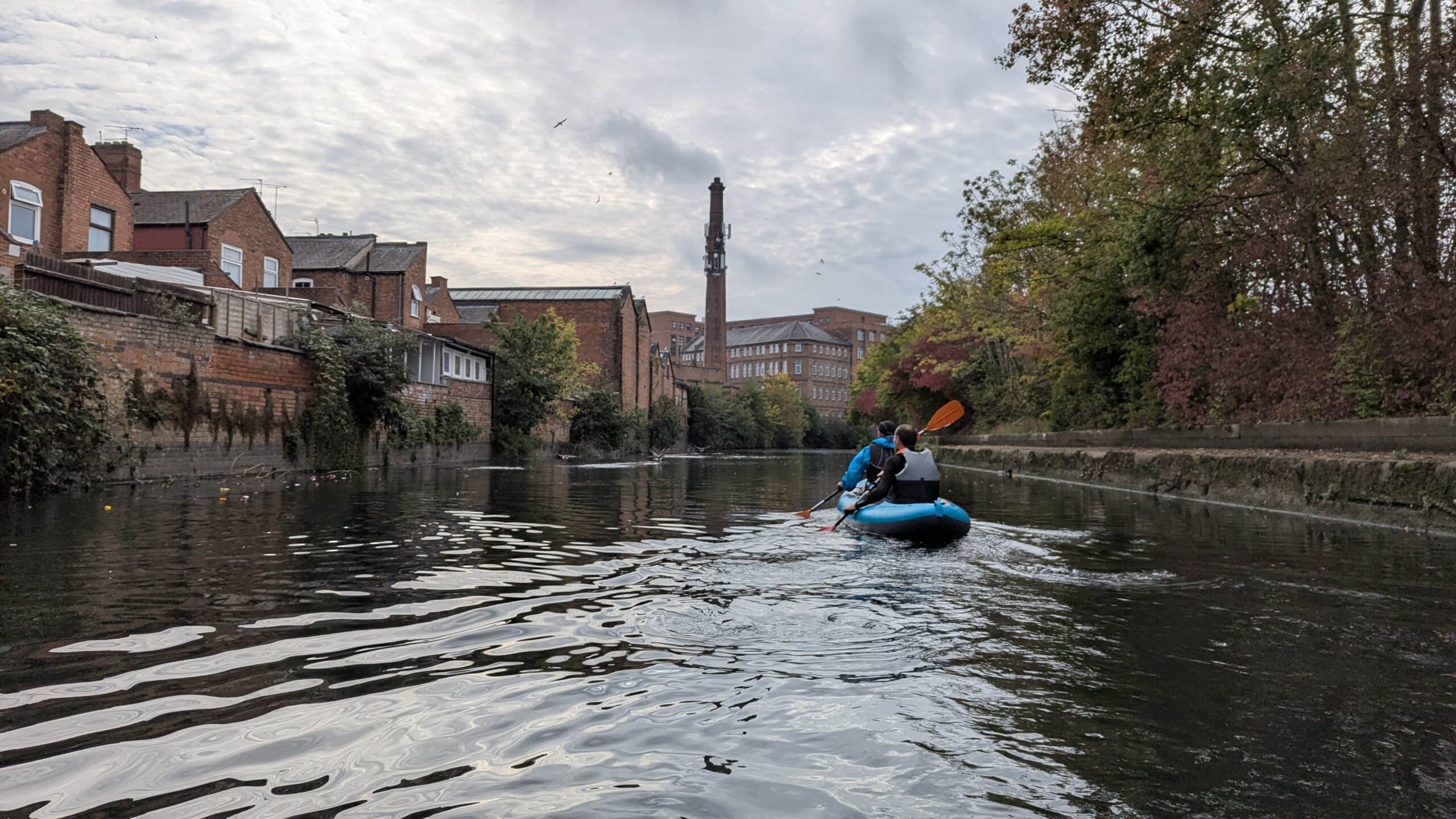
Rigidity was the big upgrade, but toughness got a huge boost, too. That old fear of popping your kayak on a stick? Not really a concern if you buy something decent.
Modern inflatables use ultra-durable materials like Duratex and military-grade PVC, the same stuff they use for whitewater rafts that survive smacking into rocks all day. On top of that, most decent inflatables are split into multiple air chambers. Even if you manage to poke a hole, the other chambers keep you floating and get you back to shore.
So: Who’s Still Reaching for a Hard-Shell?
If you’re racing, running rapids, or looking to cross oceans, sure, nothing beats a specialty hard-shell. Fiberglass and rotomolded plastic are built for those conditions.
But for almost everyone else, folks paddling lakes, fishing, or just wanting to get out on the local river—modern inflatables are almost as good on the water, and they’re a heck of a lot more convenient.
They fold into a duffel bag and fit in any closet.
You don’t need a roof rack or a buddy to help you haul 60 pounds up on your car.
And since the sides have a little give, you’ll stay more comfortable over the long haul.
Look, the inflatable kayak isn’t a compromise anymore. It’s a smart, capable piece of gear. Just make sure you get one with a drop-stitch floor, and you’ll never have to paddle a banana boat again.