Jumping into kayaking is a blast, but picking your first boat can feel overwhelming, there are just so many choices. In the UK, our waters are diverse: think calm Scottish lochs, the meandering Thames, or the rugged Cornish coastline. So, the best kayak really comes down to where you want to go and how you’re going to transport it.
Here’s a simple guide to help you figure out which beginner kayak fits your needs in the UK. We’ll cover costs, practicality, and safety for each type, so you can get paddling without the headache.
1. Inflatable Kayaks (Space-Saver Champs)
Inflatables are everywhere now, and for good reason. You don’t need a garage or even a roof rack, they fit just about anywhere.
These kayaks are made from tough PVC or fabric, and you inflate them in minutes. Newer “drop-stitch” models, with loads of tiny threads inside, actually feel pretty solid, almost like the hard-shell ones.
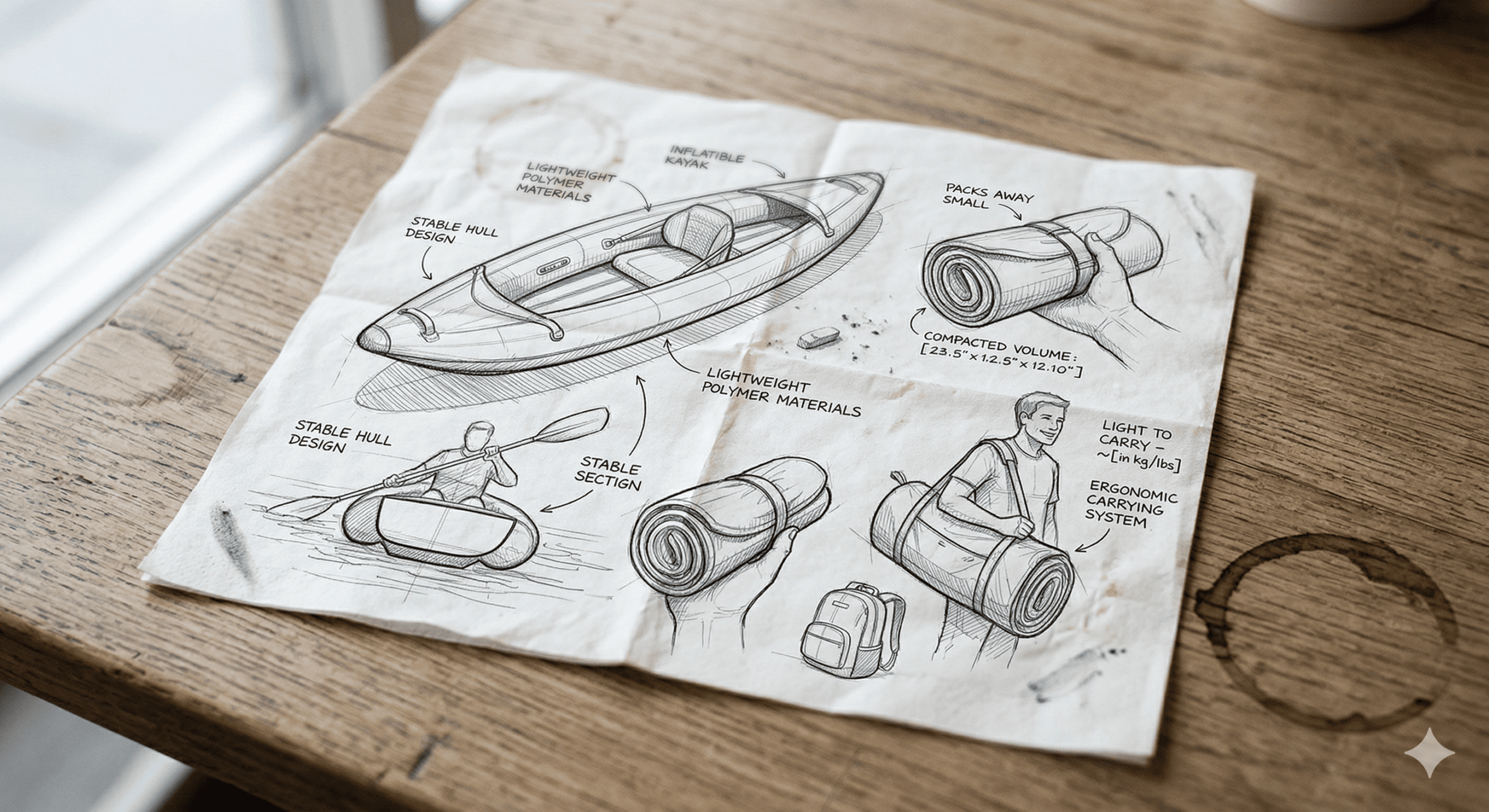
Ideal for beginners? Absolutely. They float well, they’re wide, and they’re tricky to tip over.
Travel-wise, nothing beats them. You just deflate and fold them into a big backpack or holdall. They’ll fit in the boot of your car, campervan, or even on the train.
Price-wise, basic PVC models (like Decathlon’s Itiwit) start around £150 and go up to £400. The fancy drop-stitch ones are pricier, usually £500 to £900 or more.
Heads up: Cheaper inflatables are great for calm waters, but they sit high and catch the wind, almost like a kite on choppy days. If you want to paddle on the coast, it’s worth investing in a drop-stitch model. Oh, and don’t forget to dry your inflatable properly before packing it away, or you’ll be fighting mould later.
2. Sit-On-Top Kayaks (Confidence Boosters)
Worried about getting trapped underwater? Sit-on-tops are your best friend. Here, you sit in a molded spot right on top of the hull.
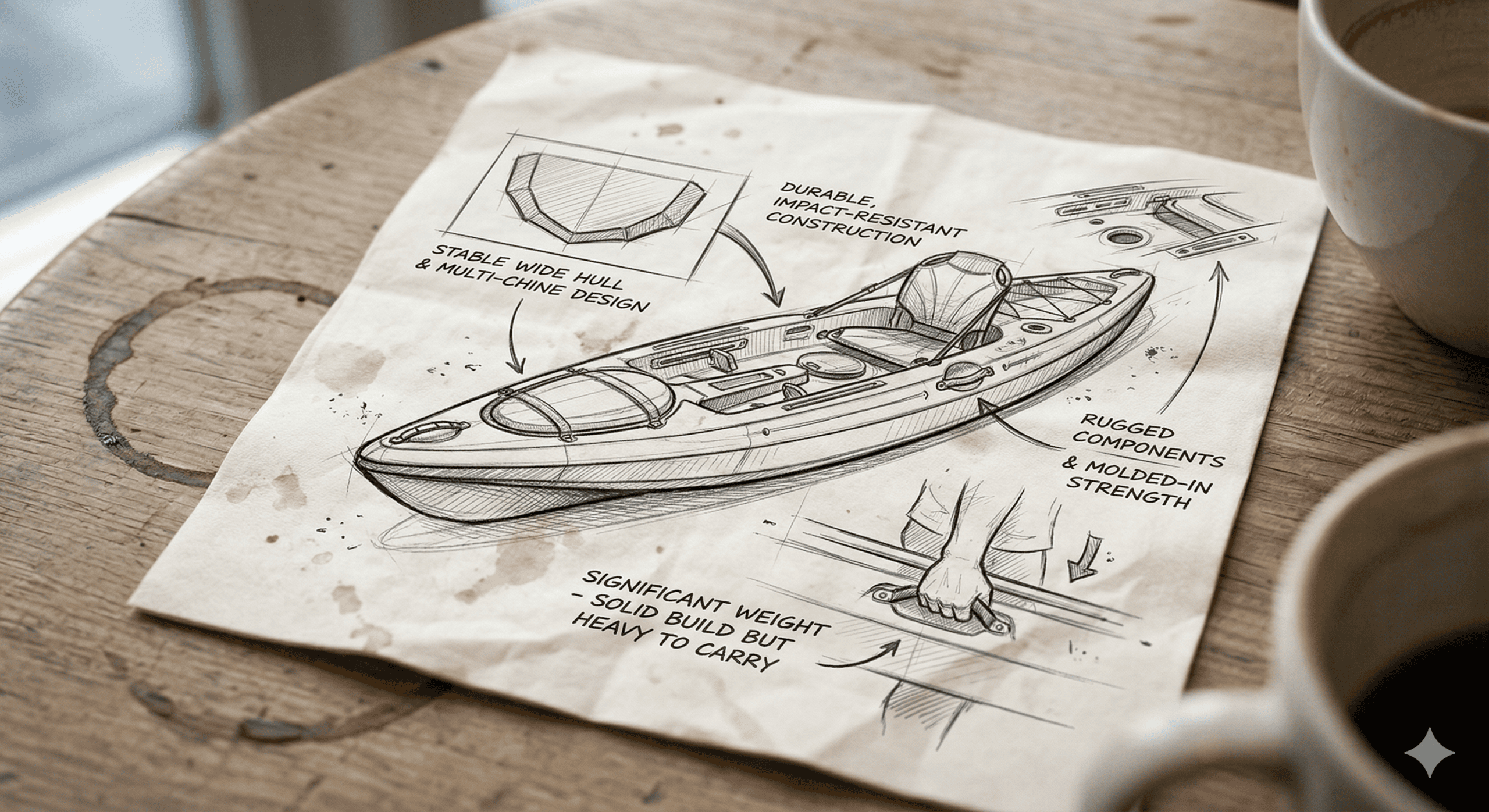
Perfect for beginners. They’re super stable, and if you fall off, you climb right back on, no fuss. Loads of new kayak anglers and coastal explorers start with these.
Transport though? That’s tricky. They’re chunky and heavy. You’ll need a roof rack, strong straps, and maybe a trolley to move it from your car to the water.
Cost: Mostly £300 to £700. Trusted brands like Islander, Feelfree, and Enigma make durable models that’ll survive years of abuse.
Heads up: When you’re out there, you’re at the mercy of the weather. In the UK, you’re going to get wet, paddle drips, surprise showers, the works. So, grab a solid wetsuit or some good waterproof trousers. Seriously, it’s worth it.
3. Closed Cockpit Kayaks (The Classic Style)
These are the kayaks you picture when someone says “kayak”, hard shell, you sit inside, your legs tucked into a cockpit. People call them “sit-in” recreational models.
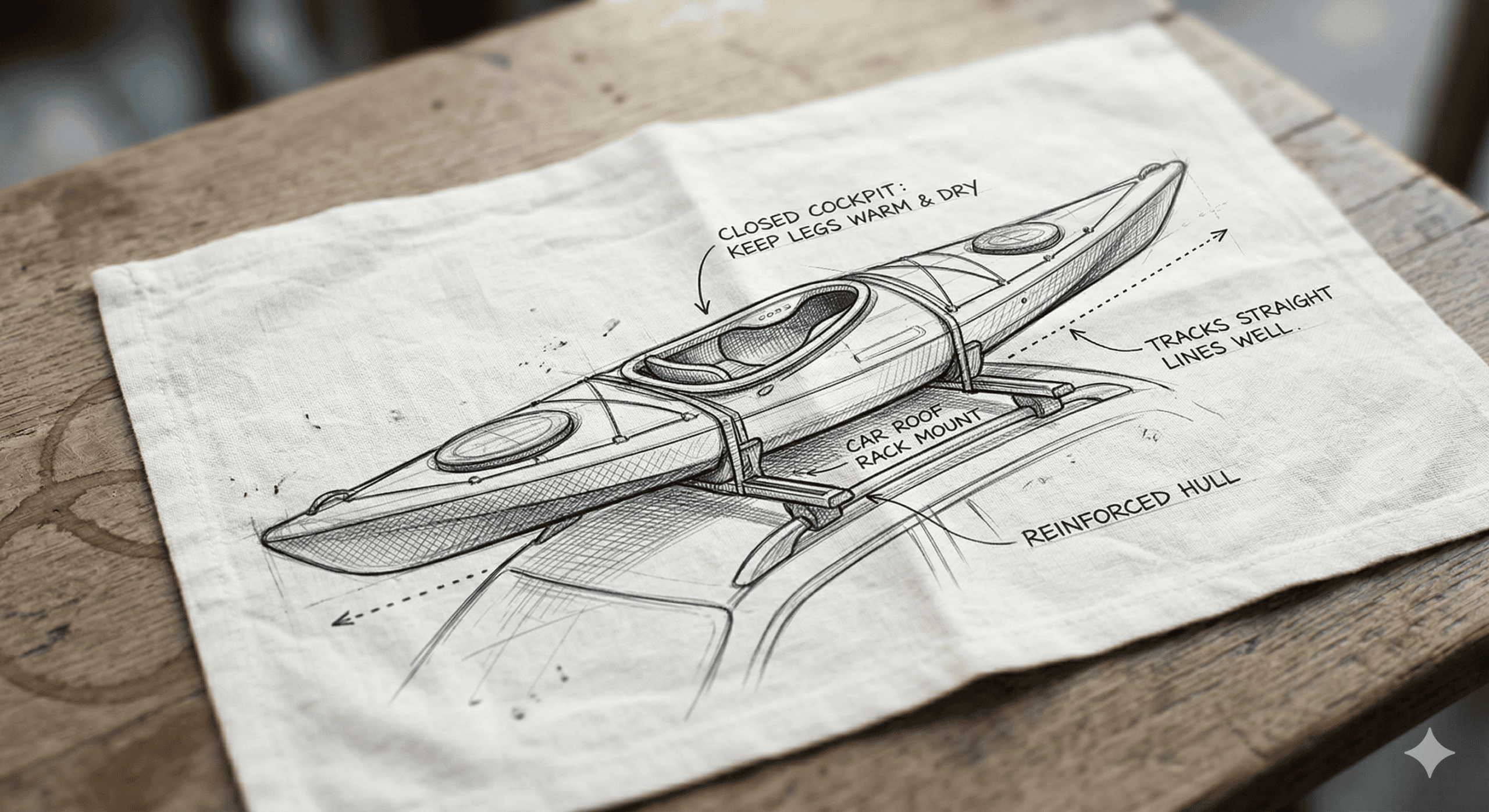
So, what’s the deal? Your lower half is protected inside, which helps you stay warm and dry.
Are they beginner friendly? Absolutely, as long as you’re looking at the recreational or touring types. The big roomy cockpits are easy to get in and out of, and the flat hull makes these super stable. If you are in any doubt, grab a lesson from your nearest delivery partner!
Travel-wise: You still need a roof rack, just like with a sit-on-top, but closed cockpits are usually a bit lighter and easier to fit onto your car. They’re also more streamlined than the chunky open models.
Price: Expect to pay somewhere between £400 and £800, sometimes more.
Good to know: Closed cockpit kayaks will keep you surprisingly dry and cosy, perfect for the UK’s moody weather. They glide faster, track straighter, and feel more efficient than the basic inflatables or the chunkier sit-on-tops.
4. Specialised Kayaks (Read This Before Buying)
If you’re new, you’ll see all kinds of specialised kayaks for sale. Honestly, unless you’re joining a club to really focus on one of these sports, skip them for your first boat.

Sea Kayaks: Long (we’re talking 15 feet or more), skinny, and built to handle waves with sealed bulkheads for safety. They’re fast, but pretty tippy for beginners and tricky to steer unless you learn some advanced moves. Plus, you need to know specific rescue techniques like the Eskimo roll.
Whitewater: These are short, snub-nosed, and curve up at the ends (think banana-shaped). Made to spin and turn fast in rapids, but on a calm lake? You’ll just go in circles until your arms ache.
Slalom Kayaks: These are at least 3.5m in length and built for speed, often made from carbon fibre. They are some of the lightest kayaks around, but need to be treated with care. And with slalom kayaks costing £1500 and above, they aren’t advisable as a first boat.
Freestyle Kayaks: Basically tiny stunt boats for tricks in river waves. They’re so unstable on flat water, it’s like trying to balance on a bar of soap, not good for touring.
5. Must-Know UK Safety Tips
UK waters are gorgeous, but don’t be fooled. They stay cold, and if you’re by the sea, tides are serious business.
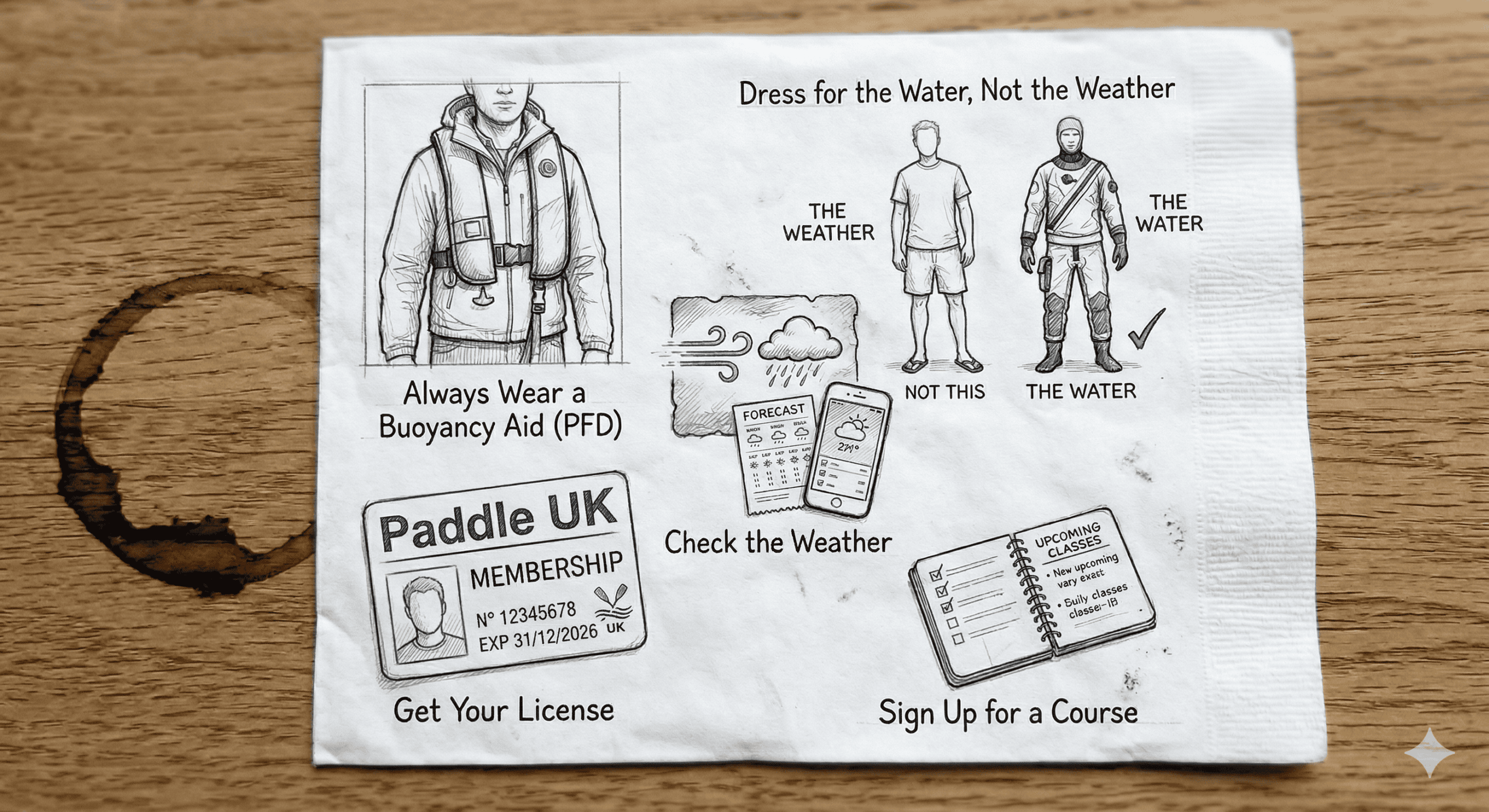
- Always Wear a Buoyancy Aid (PFD): No excuses here. This isn’t a regular lifejacket, it lets you paddle freely but keeps you floating if you capsize.
- Dress for the Water, Not the Weather: Water here is cold, even in July. That means if you fall in, you’ll feel it, fast. A wetsuit or dry-gear is essential on open water or by the coast. If you are going on a trip or further afield, take some spare clothes in a dry-bag with you.
- Check the Weather: If you’re going out on the sea, always look up RNLI safety tips, tide schedules, and offshore winds (those can carry blow-up kayaks out to sea quicker than you’d think). For rivers, check the flow after rain, what looks calm one day can get dangerous fast.
- Get Your License: If you’re paddling on most rivers or canals in England and Wales, you need a waterway license. Easiest way? Join Paddle UK.
- Sign Up for a Course: A “Paddle Safer” class or a basic skills session through Paddle UK really helps. You’ll learn efficient paddling, how to climb back in if you fall out, and how to read water conditions. Paddle UK’s delivery partners are the perfect places for these lessons.
Final thoughts – what should you buy?
If you’re tight on storage or drive a small car, a high-pressure inflatable is your best all-round pick, it performs well and packs up small. If you live near the coast or larger bodies of water, have somewhere to store it, and just want an easy, worry-free adventure platform, grab a sit-on-top. For longer paddles on rivers and lakes where staying warm and dry matters, you can’t beat a recreational closed-cockpit kayak. Choose what fits your life, and you’ll have a great time.