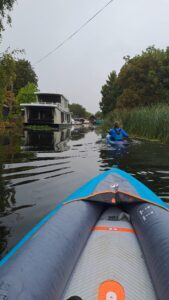
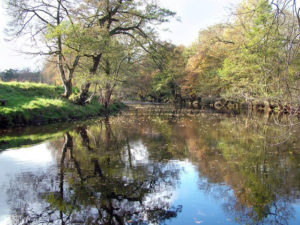
Not many heritage trails are best experienced by paddle craft, but this one certainly is! This route takes you from the canal’s terminus at Cromford Wharf, with a portage at High Peak Junction before continuing to Lea Wood Pump House. This route has been developed in partnership with Derbyshire County Council.
Many towns, villages, and sites across the UK can lay claim to being the birthplace of the Industrial Revolution – but Cromford’s claim is as strong as any. Water flowing from Cromford Sough helped keep the River Derwent frost free, leading Richard Arkwright to choose the tiny Derbyshire village as the site for the world’s first water-powered cotton spinning mill, which opened in 1771. With Arkwright’s Mill, the increasing development of further industries in the area and the continued quarrying and mining in the region led to increased demands for improved and reliable navigation to help transport both raw materials and finished goods to and from this gateway to the Peak District. The new Cromford Canal was opened in 1794, connecting to the Erewash and Nottingham canals at Langley Mill, and from there to Nottingham itself and the River Trent.
The Gothic Warehouse—named after the eastern elevation of the building, which was decorated due to its visibility from Arkwright’s home—sits right by the canal at the wharf. Today it is used as an educational hub and often houses exhibitions or information about the area. A café now occupies another warehouse on the opposite side of the canal.
Only a short section of the Cromford Canal still holds enough water to make it a reliable paddle. Past Lea Wood Pump House, the canal becomes too shallow, with debris and other blockages leaving the canal unnavigable even for canoes.
The High Peak Junction buildings were built between 1826 and 1830, making them the second oldest railway workshops in the world, serving as the transshipment point between the canal and the developing Cromford & High Peak Railway, which connected the Cromford Canal to the High Peak Canal at Whalley Bridge. The terrain between the two was too steep and with too great an altitude change to construct a canal, so instead, long, steep railway inclines were built, with huge steam engines (like the one remaining in operation at Middleton Top) hauling the trains uphill. In 1888, a runaway truck coming down the Sheep Pasture incline derailed at the junction, damaging the canal banks and the railway (just past the tow path) before its cargo of gunpowder exploded in the fields beyond. Just beyond the workshops are the remains of a catch-pit built to prevent further incidents, with the mangled remains of a 1950 runaway truck still in the pit today.
Directly on/by the trail’s route are:
- Arkwright’s Mill at Cromford, with shops and a range of heritage trails and exhibitions—see the Cromford Mills website
- High Peak Junction—see Derbyshire County Council’s High Peak webpage
- Lea Wood Pump House—Details of steam days can be found on the Derbyshire County Council website or at the Leawood & Middleton Pump Group site
- Birdswood—the trip boat run by the Friends of the Cromford Canal operates between Cromford Wharf and Lea Wood Pump House, horse drawn on days when the pump house is in steam—see the Birdswood website.