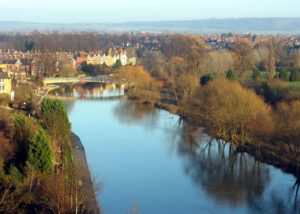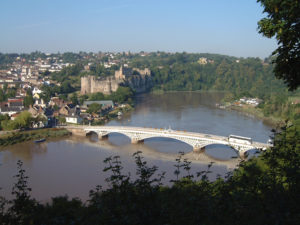
Start: Haw Bridge is a useful start point as it has floating pontoons, avoiding the dreaded mud problem on many lower reaches of the river. These act as moorings for the inn, so be careful and considerate, using either one of the four parking places on the road above the pontoon, or the pub car park (asking first). If leaving vehicles here, and returning (the suggested trip) it would be reasonable to go in and use the pub afterwards.
The Severn is one of the longest rivers in England, rising in Wales giving well over 100 miles of paddleable water. It does not end in an industrial conurbation as do the Thames and Trent, and the towns upon its lowest reaches are all worth visiting; Worcester, Tewkesbury and Gloucester.
With experience, a very enjoyable paddle-camping trip can be had upon the Severn. Below Stourport, the Severn is canalized. You then come across a series of very large weirs at islands, each with an attendant lock on the other side. As the river valley broadens out near to Worcester, the river is subject to flooding in wet winters, one of the main reasons for there being few villages or towns on the river.
Two factors will affect the time to paddle the trail; any possible wind, and the flow of the river. Do not attempt if the river is very high, as paddling against the flow will be difficult or impossible. If there is a high wind against you, paddling this distance would be very difficult. The official tidal limit is at Maisemore Weir, 5 miles below Haw Bridge, above Gloucester. BUT, at spring high tides, the tidal effect can be felt up to Tewkesbury. Therefore, paddling during, or just after stormy weather is not advised.
Tewkesbury is a gem of a town, with its Abbey of the Blessed Virgin Mary being the second-largest parish church in England. It was consecrated in 1121. Further useful information can be found on the following websites: