Kennet and Avon Canal – Newbury to Aldermaston Paddle Trail

Kennet and Avon Canal – Newbury to Aldermaston Paddle Trail

2-3 hours
Duration
9 miles
Distance
One Way
Moderate
Difficulty
RG14 5AP
Start Postcode
RG7 4JS
End Postcode
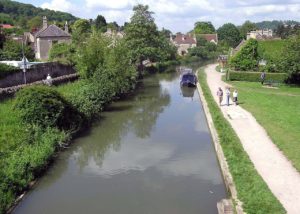
A. Put in from Newbury Wharf and turn right, paddling away, with the slight flow of the canal, from the Visitor Centre. A boat yard is passed before you arrive at Greenham Lock. Portage on the left, and put back in either just before the bridge, or cross the bridge and put in from the moorings below.

B. The canal becomes more countrified before then Ham Lock is reached, with a very low bridge ahead. Both have to be portaged on the right, even though the towpath is on the left here.

C. Now you are back on the river, with pleasant meanders. The river goes right, and you left, into the navigation, and Widmead Lock.

D. After this is a paddle into Thatcham, with Monkey Marsh Lock before the village, and a low footbridge which might not have enough height in low water. A portage is on the right.

E. If you prefer a shorter paddle of around 4 miles, Thatcham is an optional place to stop. The railway station is nearby with a pay car park.

F. The route then takes in Colthrop Lock after another half mile, followed by Midgham Lock, also a half mile after.

G. Two low footbridges are between Midgham and the next two locks, Heals, and Woolhampton, which might require portaging. Woolhampton has a lovely public house.

H. There follows a section of nice river with flow and meanders, before a left turn (at Old Mill) towards Aldermaston Wharf, a section lined with trees. Aldermaston Lock, your finish point, has beautifully scalloped edges. It was built by John Hore in the early 1700s, and re-built about 1750.

Discover More

The portages are mainly up grassy banks, which can be slippery. The locks are now being supplied increasingly with mooring and portage points, which are always on the towpath side of the canal. Also, beware of low swing bridges.

Monkey Marsh Lock was built between 1718 and 1723 under the supervision of engineer John Hore of Newbury and is one of the only two remaining turf-sided locks left on the canal. It’s listed as an ancient monument by English Heritage. These locks are wider, as they have to slope (stone or brick locks have vertical sides), and so they require more water and are slower to fill.

This trail does have some swing bridges and we would advise that you consider the craft you are in, the river levels, and the potential need to portage. If you do go under these bridges, please look out for any nuts and bolts protruding below the bridge.

Aldermaston Wharf. The car park is behind the basin area, with public toilets. There might be space on the roadside but do watch for the larger car park as the height restriction is often across.

Licence Information

The waterways in this trail are managed by the Canal & River Trust, and it is a requirement for paddlers to hold a licence. Paddle UK’s On The Water membership includes an annual licence for here as well as other waterways.

When paddling, have your membership card with you as proof of licence; otherwise, you could face a fine. Get your digital membership card straight away with your licence and liability insurance included from www.paddleuk.org.uk.

JOIN PADDLE UK

Safety Information

We want you to have fun and a safe paddle! Here are some helpful tips to ensure you paddle responsibly and stay safe on your journey. Please take a moment to review these important safety tips:

– Always wear a correctly sized buoyancy aid

– Carry a mobile phone – in a waterproof case

– Tell Someone Where You’re Going

– Check the weather and conditions

– Know your limits

Check out some useful blogs and e-learnings on how to keep safe

Water Safety

Navigation eLearning

Tides eLearning

Weather eLearning

Environment

Wherever and however you paddle, our Paddlers’ Code helps to ensure we can all enjoy and share the water safely and protect our precious environment.

Don’t get sick doing what you love. We know water quality is a concern for many paddlers. Click here for some simple advice on water quality and how to protect yourself.

Get informed, stay safe and make good decisions by checking the National Storm Overflow Map

Paddlers can play a vital role in keeping our waters free of harmful non-native species. It is crucial you Check, Clean and Dry you boat and equipment to prevent the spread. Click here for more information on Invasive Non-Native Species.

For more environmental advice and guidance, see our Blue Space Blogs section on the Paddle UK website.


Video