Gloucester & Sharpness Canal – Purton to Sharpness Return Paddle Trail

Gloucester & Sharpness Canal – Purton to Sharpness Return Paddle Trail

1-2 hours
Duration
3 miles
Distance
Out and Back
Very Easy
Difficulty
GL13 9HU
Start Postcode
GL13 9HU
End Postcode
A. Park in the car park opposite the church in Purton and get on the water from the landing stage.

B. Turn left and head carefully under the upper and lower swing bridges and out of Purton. Watch out for traffic.

C.  Keep following the canal as it starts to wind along the river Severn and keep your eyes peeled for a glimpse of hulks (old, disused barges) sunk into the bank to strengthen it.

D. A bit further on you will come across a large stone tower. This is the remains of the Severn Railway bridge. Stop and have a look around if you want.

E.  When you see a fork in the canal you have reached Sharpness Docks. Unfortunately you can't explore these, so turn round and enjoy a nice leisurely paddle back to Purton.

Discover More

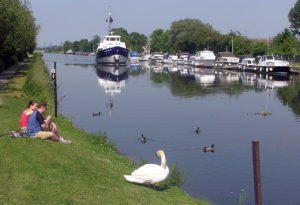
This trail on the Gloucester & Sharpness Canal is an excellent place for a first paddling trip and is one of many along this historic canal. Glimpse the River Severn from the lower end of this canal and get the chance to see the hulks sunk into the bank.

The Sharpness to Gloucester canal is a new experience for most English paddlers – much more like a continental European Canal or like the Caledonian Canal in Scotland, easily wide enough to avoid anglers’ lines, and with large ships going up to Gloucester docks at times.

The Gloucester & Sharpness Canal was built and opened in 1827, after a period of stops and starts on the project due to ongoing financial difficulties. The purpose was to by-pass a long and dangerous bend on the Severn estuary at Arlingham.

The paddle steamer ‘Oliver Cromwell’ used to ply up and down the canal, but she unfortunately sank off the coast of Anglesey in 2018 whilst on the way to her new home in Ireland.

Purton has the largest ships’ graveyard in maritime Britain and is an important locality for studies of vertebrate palaeontology. It is also a SSSI (Site of Special Scientific Interest).

The Severn Railway Bridge stood for nearly 100 years, but unfortunately a number of collisions by barges caused part of it to collapse. Just before repairs started, another capsized ship crashed into it causing even more damage! After this, the unlucky bridge was demolished.

Further information can be found on the following websites:

Licence Information

The waterways in this trail are managed by the Canal & River Trust, and it is a requirement for paddlers to hold a licence. Paddle UK’s On The Water membership includes an annual licence for here as well as other waterways.

When paddling, have your membership card with you as proof of licence; otherwise, you could face a fine. Get your digital membership card straight away with your licence and liability insurance included from www.paddleuk.org.uk.

JOIN PADDLE UK

Safety Information

We want you to have fun and a safe paddle! Here are some helpful tips to ensure you paddle responsibly and stay safe on your journey. Please take a moment to review these important safety tips:

– Always wear a correctly sized buoyancy aid

– Carry a mobile phone – in a waterproof case

– Tell Someone Where You’re Going

– Check the weather and conditions

– Know your limits

Check out some useful blogs and e-learnings on how to keep safe

Water Safety

Navigation eLearning

Tides eLearning

Weather eLearning

Environment

Wherever and however you paddle, our Paddlers’ Code helps to ensure we can all enjoy and share the water safely and protect our precious environment.

Don’t get sick doing what you love. We know water quality is a concern for many paddlers. Click here for some simple advice on water quality and how to protect yourself.

Get informed, stay safe and make good decisions by checking the National Storm Overflow Map

Paddlers can play a vital role in keeping our waters free of harmful non-native species. It is crucial you Check, Clean and Dry you boat and equipment to prevent the spread. Click here for more information on Invasive Non-Native Species.

For more environmental advice and guidance, see our Blue Space Blogs section on the Paddle UK website.


Video