Bridgewater Canal – Barton upon Irwell to Leigh Paddle Trail

Bridgewater Canal – Barton upon Irwell to Leigh Paddle Trail

3-5.5 hours
Duration
10.5 miles
Distance
One Way
Easy
Difficulty
M41 7LG
Start Postcode
WN7 4QE
End Postcode
A. Access the water from a path on the Trafford Park side ofthe Manchester Ship Canal. Put on and paddle over the Barton Swing Aqueduct.

B. The navigation now curves right through the suburbs of Salford and on to Worsley. Take a break here by mooring in the park opposite
the Boat

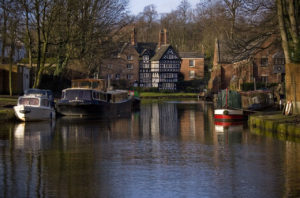
C. Worsley is under consideration to become a World Heritage Site. Before leaving paddle to the right of the Packet House and under an arch into the Worsley Delph. Here you will see the entrance to two tunnels which lead to 46 miles of underground canal networks.

D. Exit the basin, taking note of the white building, a 17th century nail making workshop, between the entrance and exit. Your route continues to the right, in front of the Packet House and under a road bridge.

E. Leave behind the industrial past and head through open farmland to Boothstown, where a new marina and a large modern pub have been constructed.

F. Your paddle finishes at the Plank Lane Swing Bridge, just beyond Pennington Flash, in an area which was part of Brickshaw Coal Mine. Note the strange orange colour of the water caused by iron ochre seeping from the old coal mines.


Discover More

The Bridgewater Canal was constructed when Lord Ellesmere, the Duke of Bridgewater, wanted to transport his coal from his underground mines in Farnworth and Bolton, some 10 miles away. The present structure of the Barton Swing Aqueduct was built in 1894 to replace the original stone arches (although one still remains).

Worsley is widely recognized as the place where the seeds of the canal age were sown. At Worsley, take your time to look at the boat house and Packet House.

The boat house was built by Lord Ellesmere to house the royal barge built for Queen Victoria’s visit in 1851. The Packet House, a half-timbered building, sits at the head of the canal where the navigation swings left. It was originally built in 1760. It is so named because it was where the packet boats left on their journey to Manchester.

Before continuing, paddle to the right of the Packet House and under an arch into the small shallow basin of Worsley Delph. Here you see the entrances to two tunnels which lead into 46 miles of underground canal networks. The left one is completely blocked off, but the right one still allows the water from the now-defunct coal mines to drain freely into the canal.

Once clear of this, the canal heads west through open country through Boothstown. The area’s mining heritage is never far away, and as you approach Astley, the pit-head gear of the Colliery Museum is clearly visible. From here, an industrial wasteland is entered, but soon the mill chimneys of Leigh appear. At Leigh Bridge, the Bridgewater becomes the Leeds & Liverpool Canal, but our journey continues beyond Leigh towards Pennington Flash, now a sailing and water activity centre. You get out at Planks Lane Bridge just beyond the Flash.

Further useful information can be found on the following websites:

Licence Information

The waterways in this trail are managed by the Bridgewater Canal Company and it is a requirement for paddlers to hold a licence. Paddle UK’s On The Water membership includes an annual licence for here as well as other waterways.

When paddling, have your membership card with you as proof of licence; otherwise, you could face a fine. Get your digital membership card straight away with your licence and liability insurance included from www.paddleuk.org.uk.

JOIN PADDLE UK

Safety Information

We want you to have fun and a safe paddle! Here are some helpful tips to ensure you paddle responsibly and stay safe on your journey. Please take a moment to review these important safety tips:

– Always wear a correctly sized buoyancy aid

– Carry a mobile phone – in a waterproof case

– Tell Someone Where You’re Going

– Check the weather and conditions

– Know your limits

Check out some useful blogs and e-learnings on how to keep safe

Water Safety

Navigation eLearning

Tides eLearning

Weather eLearning

Environment

Wherever and however you paddle, our Paddlers’ Code helps to ensure we can all enjoy and share the water safely and protect our precious environment.

Don’t get sick doing what you love. We know water quality is a concern for many paddlers. Click here for some simple advice on water quality and how to protect yourself.

Get informed, stay safe and make good decisions by checking the National Storm Overflow Map

Paddlers can play a vital role in keeping our waters free of harmful non-native species. It is crucial you Check, Clean and Dry you boat and equipment to prevent the spread. Click here for more information on Invasive Non-Native Species.

For more environmental advice and guidance, see our Blue Space Blogs section on the Paddle UK website.


Video